

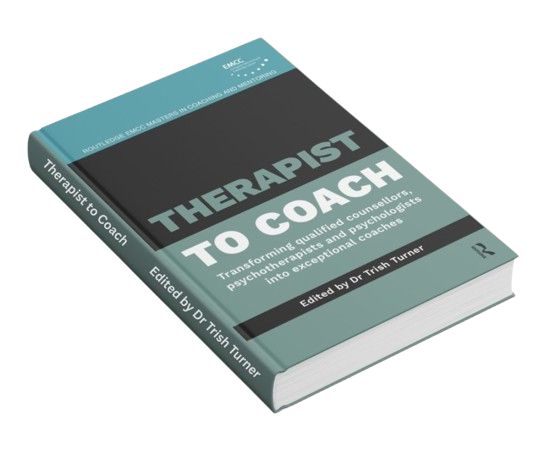
Edited by Dr Trish Turner
Chapter 11: A stage development approach to supervising dual-qualified coaches
By Katherine Long
This chapter introduces a stage development lens for understanding and supervising the transition from therapist to coach. Drawing on adult development theory and coaching supervision frameworks, it explores how dual-qualified practitioners make sense of their evolving identity, values and stance over time.
The chapter identifies typical patterns that emerge as practitioners shift from therapeutic to coaching paradigms, including early reliance on psychological expertise, ambivalence about authority, and growing confidence in embracing uncertainty and emergence. Using composite vignettes from supervision, it illustrates how developmental stages manifest in practice and how supervision can support growth at each point.
Rather than viewing supervision as solely corrective or technical, the chapter advocates for a developmental, dialogic and context-sensitive approach that honours the complexity of dual practice. It offers a framework for supervisors and supervisees to engage in rich, reflective inquiry that deepens insight, fosters ethical maturity, and supports the flourishing of an integrated coaching identity.
Biography
Katherine has worked in coach and supervision development for over 20 years. She was formerly Director of Development and Supervision at The OCM and lead facilitator on the Master’s in Coaching at the University of Warwick. A recognised thought leader in supervision, she contributed to the first edited collection focused on coach supervision, The Self in Supervision in Coaching and Mentoring Supervision: Theory and Practice (Bachkirova et al., 2011). Her chapter, Supervision and the Seventh Eye in Coaching Supervision: Advancing Practice, Changing Landscapes (Birch & Welch, 2019), explores supervision’s role in addressing broader, evolutionary themes. Katherine applies a living systems perspective to her work across supervision, leadership, and organisational development. She also facilitates learning spaces for regenerative practitioners, with a particular focus on the role of healing in service of humanity.