

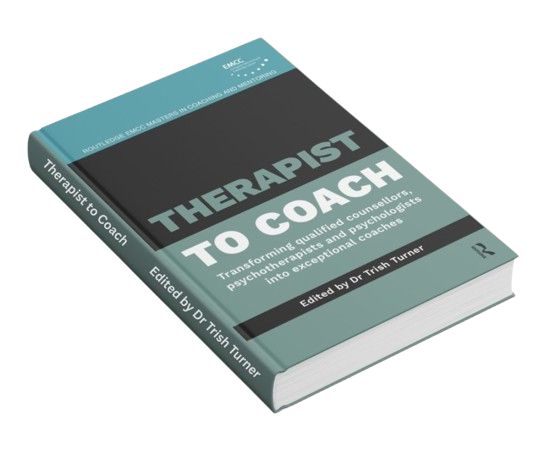
Edited by Dr Trish Turner
Chapter 5: Tools and techniques as a dual-qualified coach
By Kim Morgan
This chapter supports therapists transitioning into coaching by introducing a broad, thoughtful approach to using tools and techniques. It explores categories such as creative, visual, embodied, somatic, values-based, cognitive and goal-focused tools, offering therapists an accessible starting point for experimentation and learning.
Rather than promoting specific exercises, the chapter encourages a reflective and ethical mindset, one that prioritises client autonomy, psychological safety and coaching outcomes. It acknowledges the challenge for therapists in navigating when and how to introduce structure without disrupting relational depth. Emphasis is placed on the coach’s intention, presence and responsiveness, with cautions against over-structuring or using tools as a substitute for connection.
The chapter offers reassurance that tools can be a valuable extension of existing therapeutic skills, so long as they are used judiciously and with clear purpose. It invites readers to begin integrating coaching techniques in ways that feel congruent with their emerging professional identity as coaches.
Biography
Kim is a Master Certified Coach (MCC) with the International Coaching Federation and holds an MA in Coaching and Coaching Development. She is the founder and Chair of Barefoot Coaching, one of the UK’s leading coach training providers, and a Visiting Research Fellow in Coaching at the University of Chester. She is also a Certified Grief Educator and Grief Recovery Specialist. Kim is co-author of The Coach’s Casebook(2015) and author of The Coach’s Survival Guide (2019), both widely respected in the coaching field. She contributed a case study on ethical challenges in associate coaching to Ethical Case Studies for Coach Development and Practice (Routledge, 2024).